What a home builder website needs to book site visits
A builder site books visits when it opens on finished houses, names the areas served, keeps phone and booking within thumb reach, loads fast and answers price.
By Zaid Rais, web engineer, Amsterdam · 1714 words
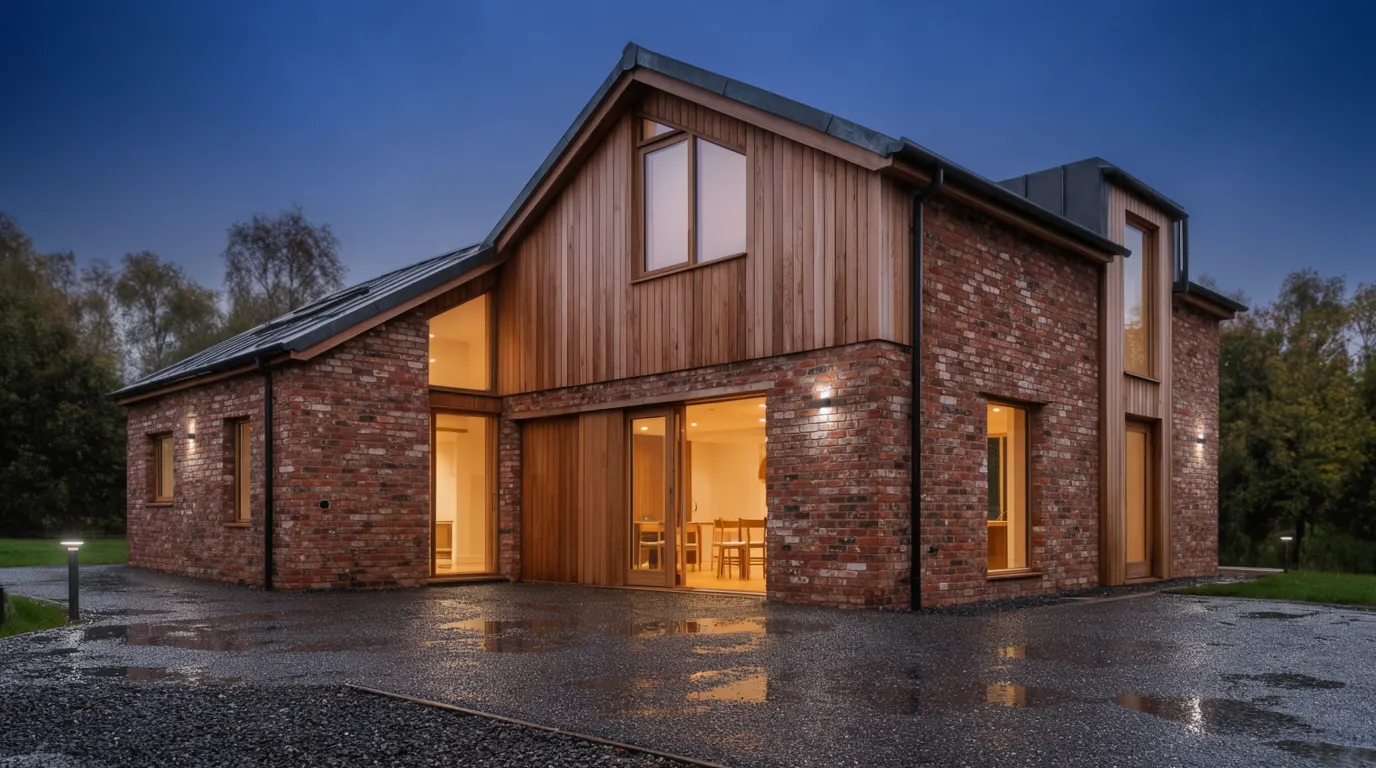
Traffic without enquiries usually means the site never asks. A builder website books visits when it opens on a finished house, states the areas it serves in plain words, keeps a phone number and a booking link within thumb reach on every page, loads in about two seconds, and answers the price question instead of dodging it.
Why does a builder website get traffic but no calls?
Because the visit ends before the decision starts. Someone planning a new build or a large extension looks at four or five builders in one evening, usually on a phone, often after eight in the evening. They are not reading. They are scanning for three answers: what you build, where you build it, and what it looks like when you have finished.
Most builder sites answer none of those in the first screen. They open on a stock image of a house that is not yours, a slogan about quality and passion, then a grid of icons for extensions, loft conversions and new builds. Nothing on that page could not be said by any of the other four builders open in the other tabs.
As a rule of thumb I plan for one to three percent of visitors to make contact on a builder site. That is a working assumption rather than a published figure, but it is a useful one: if a site brings a thousand visitors a month and produces two enquiries, the traffic is not the problem. The page is.
What should the first screen show?
One finished house, photographed well, at full width, with the area named.
That single change does more than any copy rewrite. A homeowner cannot judge your joinery from a paragraph, but they can tell in a second whether the kind of house you build is the kind of house they want. Put your best completed project at the top, add a line that names the town or region, and put the phone number beside it.
Underneath, three things in order: the next two or three projects, the kinds of work you take on written as sentences rather than icons, and who you are. Not a mission statement. A photograph of the actual team on an actual site, with a name under it.
The test I apply: cover the logo. If the homepage still reads as yours, it is doing its job. If it could be swapped with the builder in the next town, it is not.
How many projects should a builder show, and how should each one read?
Six to eight, each on its own page. More than that and the good ones get diluted by the ones you took to fill a gap in the calendar.
A gallery of twenty kitchens with no context is a screensaver. A homeowner is trying to work out whether you have done something close to what they are about to spend two hundred thousand on, and a wall of thumbnails does not tell them.
What a single project page has to carry
- The brief in two or three sentences, in the owner's terms rather than trade terms.
- Before photographs, including the ugly ones. The gap between before and after is the argument.
- Finished rooms, shot in daylight, at least eight images, sequenced the way you would walk through the house.
- The location, at least to town level.
- The timeline: start month, finish month, and honest mention of anything that slipped.
- Specification detail a self-builder would care about: structural approach, glazing, heating, insulation.
- One line from the owner, written the way they wrote it.
The timeline is the part most builders leave out, and it is the part homeowners talk about most. A page that says the build ran from March to November, with two weeks lost to a planning condition, reads as trustworthy in a way that no testimonial does.
Where do the phone number and the booking button belong?
On every page, in the header, and again at the bottom of every project page while the photographs are still doing their work.
Most builder sites bury contact on a contact page. The visitor who has just scrolled through your best renovation has to go and find it, and about half of them will not. The moment of intent is at the end of the project page, not on a separate screen two clicks later.
Give three routes, because different people use different ones. A tappable phone number for the person who wants to talk now. A booking link for a site visit or a call, with real time slots, for the person browsing at eleven at night who will not phone. A short form, four fields at most: name, phone, postcode, what you are planning. Every extra field costs completions, and asking for a budget range before any trust exists costs more than it saves.
On mobile, all of this has to sit in the lower half of the screen or in a fixed bar. A thumb does not reach the top corner of a phone comfortably, and a lot of your traffic is being read one handed on a site.
Do areas served pages actually work?
Yes, if they are real pages and not a list of town names.
One city or region done properly beats ten done thinly. A page for a town should carry at least one project you have completed there, the specific things about building in that area that you know and a stranger does not, planning quirks, conservation constraints, typical house stock, and a route to contact. That page can rank because it says something only a builder who works there could say.
Ten near identical pages with the town name swapped are the opposite. They are the pattern search engines have spent years learning to discount, and a homeowner spots them just as quickly.
Alongside that, write the areas out in the footer and in the homepage copy as ordinary sentences. Structured data for the business, its address and its reviews should be in the page source. That is part of how I build every site on the web design for home builders side of my work, and it costs nothing once it is done properly the first time.
How fast does the site need to be?
Fast enough to clear Google's Core Web Vitals thresholds: largest contentful paint under 2.5 seconds, interaction to next paint under 200 milliseconds, cumulative layout shift under 0.1. Those numbers are published by Google at web.dev and they are measured on real visits, not in a lab.
Builder sites fail the first one more than any other trade I work with, and the reason is always the same: a homepage carrying twelve full resolution photographs straight off the camera. A single 4 MB image on a phone connection is the whole budget spent before the visitor has read a word.
The fix is mechanical. Resize to the largest size the layout actually uses, serve WebP, load anything below the fold lazily, and stop shipping a slider that loads six images to show one. On my own site I hold the header image budget under 180 KB and the pages render in well under two seconds on a mid range phone. There is nothing exotic in that. It is just refusing to upload originals.
Should a builder publish prices?
Publish ranges and the basis for them, not a fixed number.
The question every homeowner has and almost no builder site answers is what a project like theirs costs. Silence does not protect you. It sends the visitor to a forum where a stranger will guess badly on your behalf, and it fills your inbox with enquiries from people whose budget is a third of what the work needs.
A paragraph that says a single storey rear extension in this region typically runs between one figure and another per square metre depending on glazing and groundworks, with a note on what moves it up, qualifies leads before they reach you. It also gives the AI assistants that now answer these questions something accurate to quote. I take the same position on my own pricing, which sits in full on the homepage rather than behind a call.
Can an assistant book visits while you are on site?
It can, and for a builder it is the single most useful piece of software on the site.
You are on a roof at four in the afternoon. The enquiry arrives at nine in the evening. An assistant trained on your own project pages, service areas and pricing basis can answer whether you build in that postcode, roughly what a kitchen extension of that size costs, how long it takes and what happens first, then offer three slots for a site visit and put one in your calendar.
The honest limits matter. It should never quote a fixed price for a specific job, never commit to a start date, and always hand over to you when the question is structural or contractual. Within those limits it turns evening curiosity into a booked appointment instead of an email you answer two days later.
What would I fix first on an existing site?
In this order, and most of it can be done without a rebuild.
- Replace the homepage hero with your best finished project and name the area.
- Add a tappable phone number and a booking link to the header and to the foot of every project page.
- Compress every image on the site.
- Turn the gallery into six project pages with brief, before, after, timeline and location.
- Cut the enquiry form to four fields.
- Publish a price basis paragraph.
- Write one proper area page for the town you most want work in.
If the underlying site is a theme that fights you on all seven, a rebuild is cheaper than the fight. A foundation site goes live in three to four weeks once the project photographs exist, which is usually the real constraint. Photographs of finished houses are the asset; the site is only the frame that shows them at the right moment to the right person.
Questions people ask
- How many projects should a home builder show on the website?
- Six to eight, each on its own page with brief, before photographs, finished rooms, location and timeline. A large undifferentiated gallery gives a homeowner nothing to judge, and weaker jobs dilute your best work.
- Should a builder put prices on the website?
- Publish ranges and the basis for them rather than fixed figures. It filters out enquiries with mismatched budgets, answers the question every homeowner has, and stops strangers guessing your prices on forums.
- Why does my builder website get visitors but no enquiries?
- Usually because the first screen does not show finished work, the areas served are not stated, and contact is hidden on a separate page. Intent peaks at the end of a project page, so the booking route belongs there.
- How fast should a home builder site load?
- Aim for largest contentful paint under 2.5 seconds on a mid range phone, the threshold Google publishes for Core Web Vitals. Oversized project photographs are the usual cause of failure.
- Do separate pages for each town actually help?
- Yes, when each page carries a real completed project there and local knowledge about planning or house stock. Near identical pages with only the town name swapped are discounted by search engines and obvious to readers.
Zaid Rais designs and builds websites, SEO and generative engine optimization, and AI assistants for architects, interior designers, home builders and real estate. Read more on web design for home builders, or book a consultation.